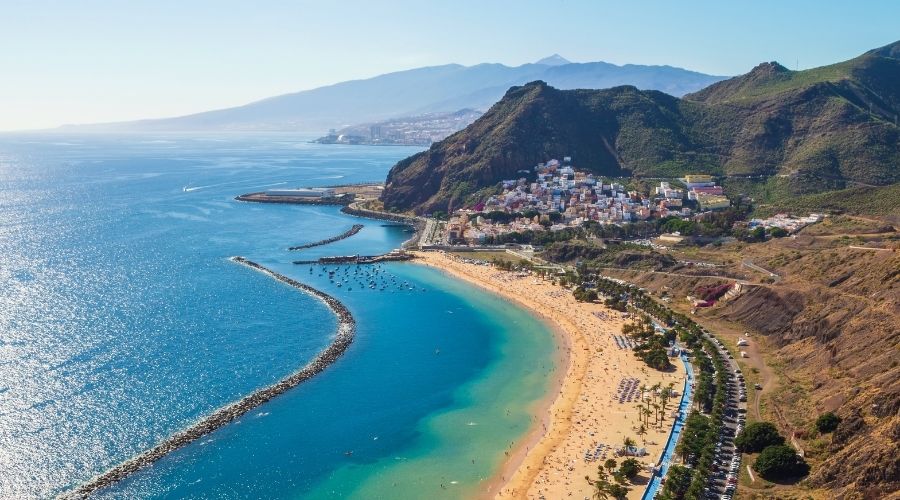
Building on an island sounds idyllic: sea views, pleasant weather and a unique environment. But behind the postcard image there is a technical and administrative reality that must be managed carefully. Constructing a home or a building in an inland area on the mainland is not the same as doing it in an island territory, where logistics, climate and regulations add extra layers of complexity.
Understanding these factors from the very beginning is essential to avoid cost overruns, delays and frustration. This is where the experience of a local team becomes critical.
1. The climate: both an ally and a challenge
The climate of many islands is one of their main attractions, but it also conditions the design and execution of construction projects.
1.1. Humidity and salinity
Constant proximity to the sea implies:
- Greater corrosion of metal elements (railings, anchors, exposed structures).
- The need for specific protection (coatings, galvanised finishes, suitable types of steel).
- The importance of good waterproofing systems on roofs and terraces.
If this is not considered when building on an island, problems such as leaks, early oxidation and deterioration of finishes may appear within just a few years.
1.2. Wind and orientation
In many islands there are prevailing winds depending on the area. This affects:
- The ideal orientation of the building.
- The design of openings (windows, balconies, sliding doors).
- The protection of outdoor spaces (porches, patios, pools).
A well-designed project will harness the wind for natural ventilation and cooling, while controlling it to avoid discomfort, noise or loss of comfort.
1.3. Solar radiation
The sun is an ally for thermal comfort and energy efficiency, but it can also cause:
- Overheating in poorly oriented rooms.
- Premature wear of exterior materials.
- The need for shading devices, awnings and solar control glass.
Bioclimatic architecture tailored to the island environment is key to achieving a comfortable and energy-efficient home in the long term.
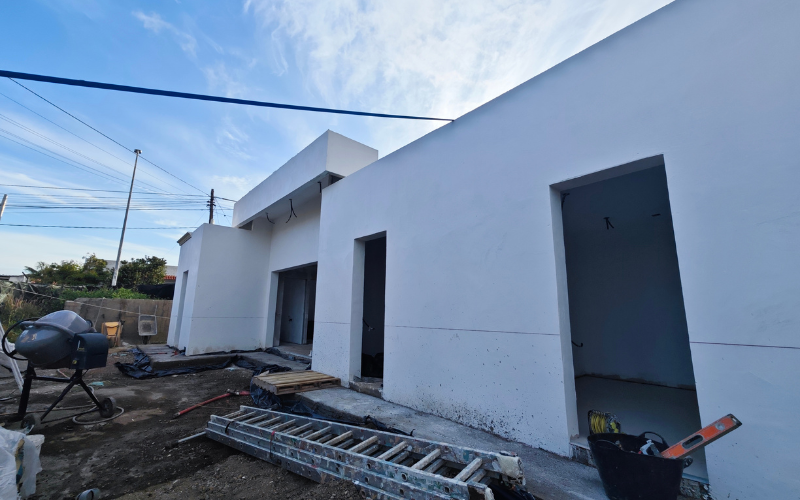
2. Logistics: everything can arrive… but not always easily or cheaply
One of the most delicate aspects of building on an island is the logistics of materials, machinery and labour.
2.1. Supply of materials
Not all materials are immediately available. Some must:
- Be shipped by sea from the mainland or other countries.
- Be ordered well in advance to meet deadlines.
- Be replaced with equivalent solutions available locally.
This requires:
- Good planning of purchases.
- A sufficiently detailed project from the outset.
- Avoiding last-minute changes that force new deliveries and delays.
2.2. Access and internal transport
Beyond getting to the island itself, you have to reach the actual construction site:
- Is the project located in an area with narrow or steep streets?
- Can heavy trucks or cranes reach the plot?
- Are there time restrictions for heavy traffic?
All this affects the type of machinery that can be used, delivery times and construction costs.
2.3. Skilled labour
On islands, there can be high demand for qualified professionals at certain times. Therefore, it is important to:
- Have reliable teams already organised.
- Plan the construction schedule carefully.
- Coordinate different trades (bricklayers, installers, carpenters, etc.) to avoid downtime.
3. Permits and regulations: the least visible but most critical part
Building anywhere involves paperwork, but on islands there are usually:
- Municipal regulations (local councils).
- Island or regional regulations.
- Special restrictions due to protected areas, coastal regulations or heritage.
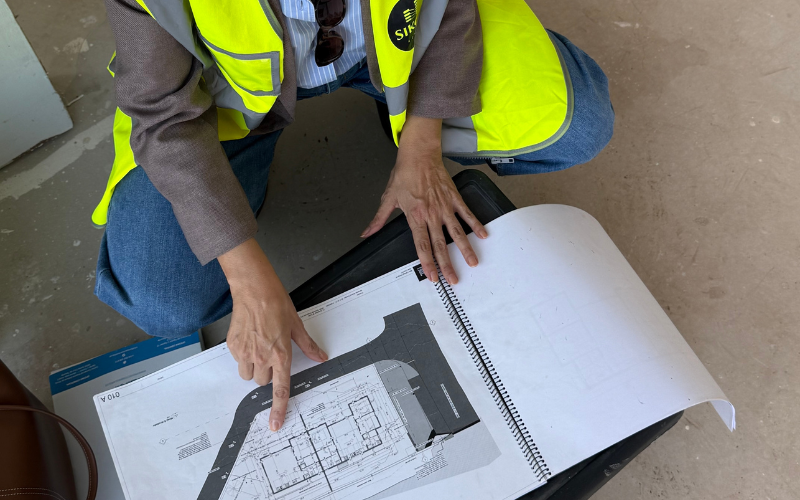
3.1. Planning and land use
Before dreaming of floor plans and renderings, you must confirm:
- The permitted land use (residential, tourist, rural, etc.).
- The maximum buildable area (m² of floor area).
- The permitted height and plot coverage.
- Setbacks, alignments and easements.
Starting a project without this preliminary analysis is the perfect recipe for redesigns or, in the worst case, having to abandon the idea.
3.2. Building permits
The usual process includes:
- Drafting of the project by a qualified technician.
- Approval or visa by the relevant professional association (where applicable).
- Submission to the local council and payment of fees.
- Waiting for review and granting of the building permit.
Timeframes vary depending on the administrative workload and the complexity of the project. Aligning your expectations and financial planning with these times is vital.
3.3. Environmental and coastal regulations
Many islands contain especially sensitive zones:
- Proximity to the coastline.
- Protected natural areas.
- Landscape and visual-impact restrictions.
This may require additional studies, aesthetic constraints or even make it impossible to build what was originally planned.
4. How to reduce risks when building on an island
To prevent your project from turning into a never-ending story, it is advisable to follow some guidelines:
- Rely on a local team from the very beginning
Architects, engineers and project managers with real experience in the island environment will save you costly mistakes. - Carry out a thorough preliminary study of the plot
Planning status, access, utilities, constraints, geotechnical conditions. The more information, the better. - Define the project in detail before starting
Materials, finishes, construction solutions and systems adapted to the climate and logistics of the island. - Plan schedule and budget with a margin
Include potential delays in deliveries, project adjustments and administrative procedures. - Monitor the work with professional supervision
Technical supervision and project management to keep deadlines and quality under control.
5. The advantage of having a specialised local team
A local expert team that knows first-hand what it means to build on an island can:
- Understand how climate affects design and materials.
- Anticipate logistical challenges.
- Master local, island and regional regulations.
- Coordinate technical services and construction so that the project progresses smoothly.
The goal is for the client to enjoy the final result —a home or development in a privileged setting— without having to suffer the complexity of the process.
If you are thinking of building on an island, the best time to surround yourself with experts is before buying the land or making the first design decision. This way, every step will be aligned with the reality of the location, your budget and your expectations.